
Can custom pcb be used in aerospace applications?
custom pcb be used in aerospace applications
Custom printed circuit boards (PCBs) have found widespread use in aerospace applications, where reliability, performance, and durability are paramount. While the aerospace industry has unique challenges and requirements, custom PCBs offer tailored solutions that meet the rigorous demands of space exploration, aircraft navigation, communication systems, and more.
One of the primary advantages of custom PCBs in aerospace applications is their ability to withstand extreme conditions. Aerospace environments are characterized by wide temperature fluctuations, high levels of vibration, and exposure to radiation and electromagnetic interference. Custom PCBs can be designed with specialized materials and construction techniques to ensure reliable operation in these harsh conditions. For example, high-temperature materials such as polyimide or ceramic substrates are used to withstand extreme heat, while robust solder joints and conformal coatings provide protection against vibration and moisture ingress.
Moreover, custom PCBs offer flexibility in design and integration, allowing aerospace engineers to optimize space utilization and performance. Aerospace systems often have strict size, weight, and power constraints, requiring PCBs that are compact, lightweight, and energy-efficient. custom pcb can be tailored to fit specific form factors and incorporate advanced features such as multi-layer designs, fine-pitch components, and high-speed interfaces. This flexibility enables the development of cutting-edge aerospace systems that push the boundaries of performance and functionality.
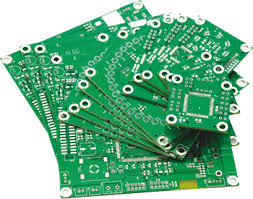
Can custom pcb be used in aerospace applications?
Another key benefit of custom PCBs in aerospace applications is their reliability and long-term durability. Aerospace missions involve significant investments of time, resources, and human lives, making reliability a critical factor in mission success. Custom PCBs undergo rigorous testing and validation to ensure they meet the stringent requirements of aerospace standards and regulations. Advanced testing techniques, such as thermal cycling, vibration testing, and accelerated aging, simulate the harsh conditions of space and aviation environments to verify the reliability of custom PCBs under real-world conditions.
Furthermore, custom PCBs enable the integration of advanced technologies and functionalities essential for modern aerospace systems. From navigation and communication systems to avionics and telemetry, aerospace applications rely on sophisticated electronics to achieve mission objectives. Custom PCBs can accommodate a wide range of components, including microprocessors, sensors, and wireless modules, enabling the development of highly capable and versatile aerospace platforms. Additionally, custom PCBs support the integration of advanced manufacturing techniques, such as additive manufacturing and 3D printing, which offer new possibilities for lightweight, high-performance aerospace electronics.
Despite these advantages, the use of custom PCBs in aerospace applications presents unique challenges and considerations. Aerospace systems are subject to strict regulations and certification requirements to ensure safety and reliability. Custom PCBs must comply with industry standards such as AS9100 for aerospace quality management systems and MIL-PRF-31032 for printed circuit boards. Additionally, aerospace projects often have long development cycles and high levels of scrutiny, requiring careful documentation, traceability, and quality assurance throughout the PCB design and manufacturing process.
In conclusion, custom PCBs play a vital role in aerospace applications, providing reliable, high-performance solutions for space exploration, aviation, and defense. With their ability to withstand extreme conditions, flexibility in design and integration, and support for advanced technologies, custom PCBs enable the development of innovative aerospace systems that push the boundaries of performance and capability. By leveraging the advantages of custom PCBs, the aerospace industry continues to advance the frontiers of science, exploration, and human achievement in the quest for space exploration and aviation excellence.