
Factors That Affect the Cost of Flex PCB Production
Affect the Cost of Flex PCB Production
The cost of rigid flex PCBs can be higher than that of traditional PCBs, but the benefits can be worth the investment in some cases. The cost of production is influenced by several factors, including design complexity, material selection, layer count, and manufacturing yield. By carefully considering all of these elements, it is possible to minimize the cost of flex PCB production.
Rigid flex circuits provide excellent performance and durability, but they do come at a premium price. This is because they require specialized materials and manufacturing processes that can’t be replicated with standard, flex pcb production. Additionally, they may need to be designed around the specific mechanical stresses and bending requirements of a particular application. This makes them a more suitable choice for applications that involve significant movement or space constraints.
Regardless of the design complexity, rigid-flex PCBs are a great solution for a variety of industries. They are well-suited to a range of applications, from high-speed circuits to medical devices. They can also be used in a wide range of environments, from extreme temperatures to highly dynamic movements.
Some of the most important factors that affect the cost of a flex circuit include its complexity, thickness, and layer count. Complexity can drive up costs through the addition of components and traces, which requires more materials and increases manufacturing time. This is why it’s essential to simplify the design whenever possible, reducing the number of layers and eliminating unnecessary components or routing.
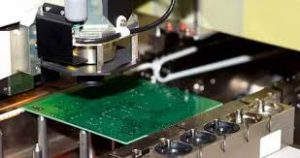
Factors That Affect the Cost of Flex PCB Production
Thicker boards tend to be more expensive, as they require more substrate and copper foil to create the necessary space for all the conductive paths. This is why it’s important to choose the right laminates, and to minimize the number of flex layers when possible.
Plating costs are another major factor that can drive up the cost of a flex circuit. These expenses include the cost of chemical solutions, electricity, and labor for electroplating copper onto the PCB’s conductive surfaces. The thickness of the copper layer also has an impact on costs, as thicker traces can be more difficult to solder.
Other costs associated with flex circuits can include the cost of adhesives and stiffeners, which are used to keep the rigid-flex structure in place. Stiffeners are typically bonded with thermal set or pressure-sensitive adhesives, which can add up to a significant amount of expense.
Buried vias are another common feature of flex circuits that can dramatically increase the cost of a design. These features improve layer-to-layer connectivity and current-carrying capabilities, but they require additional steps to make. This can increase the overall manufacturing cost, especially if they are used in high-speed designs.
Other factors that can influence the cost of a flex circuit include the choice of surface finish, drilling complexity, and fabrication techniques. Choosing the right surface finish is critical, as it protects the copper traces from corrosion and provides a solderable surface for component attachment. HASL (Hot Air Solder Leveling), ENIG (Electroless Nickel Immersion Gold), and OSP (Organic Solderability Preservative) are all popular options, but each comes at a different cost.