
Materials Crucial For Pcba Circuit Board
Crucial For Pcba Circuit Board
A PCB is composed of various components that work together to create a functional electronic circuit. One of the most crucial components is a battery, which provides power or charge to other parts of the circuit. This charge is then used by capacitors, diodes, and switches to perform a specific function like emitting light or controlling a switch.
Another important component is the resistor, which is used to control or limit the flow of electric current within a circuit. Resistors are made of varying materials and can be colour coded to identify their resistance value. In order to maintain the integrity of a circuit board, it is important to ensure that current flows only through the necessary paths. This is achieved by utilizing the appropriate components, such as diodes and transistors.
Inductors and transformers can also be used to help prevent signal interference between different parts of a circuit. They work by collecting opposite charges on conductive layers separated by an insulator, then releasing this energy in the form of magnetic field when needed. This allows for the proper functioning of a circuit without overheating and wasting electricity.
One of the most important aspects of a PCB is its copper structure, which carries electric signals throughout the entire circuit board. Known as “traces”, these copper-based roadways act as the device’s internal map, ensuring that the correct electric signals get from one point to the next with the highest possible speed. Traces are likened to a city’s streets, with wider tracks acting as broad freeways and narrower ones functioning as small streets.
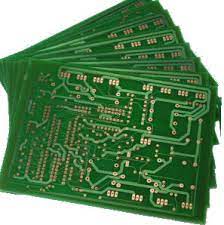
Materials Crucial For Pcba Circuit Board
The material that is chosen for the construction of a pcba circuit board is dependent on several factors, such as cost, temperature range, and signal integrity requirements. Choosing an improper material can lead to poor performance or even failure of the product. To avoid such issues, engineers must carefully identify the project requirements and choose a material that best suits them.
Some of the most common materials for PCBs include FR-4 and polyimide. FR-4 is an insulated, flame retardant composite consisting of woven fiberglass fabric and epoxy resin binder. It has the advantage of being very durable and can operate at a variety of temperatures. However, it doesn’t have the best coefficient of thermal expansion or electrical properties for high-quality signals. Polyimide is an alternative that offers a more suitable balance of performance and cost.
Other materials are more specialized for particular applications, such as radio frequency (RF) or microwave. These are more expensive, but provide superior conductivity and a higher level of thermal robustness. These are often designed for more complex circuit boards with greater operating frequencies, and require higher levels of signal integrity. It is crucial to select the right materials for your application, and a good place to start is by testing prototypes built with preferred materials before committing to production runs. This will help to ensure that the final product meets all of your design specifications.